


4.8 Stars – Based on Google Reviews

A dermatology consultation allows for the evaluation, diagnosis, and treatment of conditions affecting the skin, hair, and nails. It also includes monitoring skin signs and lesions, as well as addressing cosmetic concerns such as dark spots, rosacea, acne, and scars, uneven skin texture, enlarged pores, signs of aging, and skin quality.
Following a medical evaluation, the dermatologist develops a personalized treatment plan, which may include a skincare routine and dermocosmetics, topical or oral medication, and dermatological procedures—such as laser treatments or chemical peels—tailored to each person’s needs.
Dermatology consultations are available at Skin Boutique in Lisbon, Porto, and Cascais.

A spot, persistent redness, a lesion, or a change in skin texture can have various causes and is not always just a cosmetic issue. Therefore, a dermatological evaluation allows us to first understand the condition of the skin and, based on that, determine the most appropriate approach—clinical, cosmetic, or a combination of both.
At Skin Boutique, skin health and quality are addressed in an integrated and personalized way.

Cosmetic Dermatology focuses on the prevention and treatment of skin conditions associated with aging, sun exposure, acne, and vascular or pigmentary changes, among other factors that can affect the skin’s quality and appearance.
Rather than simply selecting a single treatment, the dermatologist evaluates the skin and determines the most appropriate approach for each case, based on its characteristics and needs.
Sunspots, hyperpigmentation, and melasma do not necessarily have the same cause, nor do they respond to the same treatments. Following a dermatological evaluation, the treatment plan may include depigmenting products, specific sunscreen, chemical peels, or various laser technologies.
Rosacea is a skin condition that can manifest as persistent redness, sensitivity, visible small blood vessels, or inflammatory lesions. Treatment may combine medical management of the condition with technologies targeting the vascular component and skin quality.
It is important to first treat active acne and prevent new scars from forming. When there are existing marks or scars, complementary treatments such as laser therapy, chemical peels, microneedling, or radiofrequency microneedling may be considered, depending on the type of scar and the characteristics of the skin.
Enlarged pores, uneven skin texture, loss of radiance, and minor imperfections can be addressed through various skin renewal and stimulation strategies. The choice always depends on the skin diagnosis and the extent of treatment required.
Over time, the skin undergoes changes in texture, pigmentation, firmness, and regenerative capacity. Aesthetic dermatology makes it possible to develop a prevention and rejuvenation plan that can combine different technologies and procedures to address these changes, aiming for gradual, balanced, and natural results.
Dermatology is the medical specialty dedicated to the prevention, diagnosis, and treatment of diseases of the skin, hair, nails, and mucous membranes.
During a dermatology appointment, various skin conditions and diseases can be evaluated. We have listed the most common ones below.
It can develop during adolescence or adulthood and vary in severity. Early treatment is particularly important for managing the condition and reducing the risk of scarring.
It can cause redness, sensitivity, visible blood vessels, and inflammatory lesions. Because it is a chronic condition, managing it may require a combination of daily care, medical treatment, and specific procedures.
Inflammatory skin conditions can cause redness, flaking, dryness, itching, or discomfort. An accurate diagnosis is essential for identifying triggers and determining the appropriate treatment.
The dermatologist manages chronic skin conditions and determines the treatment plan based on the type and severity of the condition.
Hair loss, scalp changes, and nail disorders can have various causes and should be evaluated before starting any treatment.
A dermatological evaluation allows for the observation of moles and other pigmented or non-pigmented lesions, the identification of suspicious changes, and the determination of whether monitoring, treatment, or removal is necessary.
Regular skin checks are particularly important when there are many signs, a relevant personal or family history, or recent changes in a lesion.
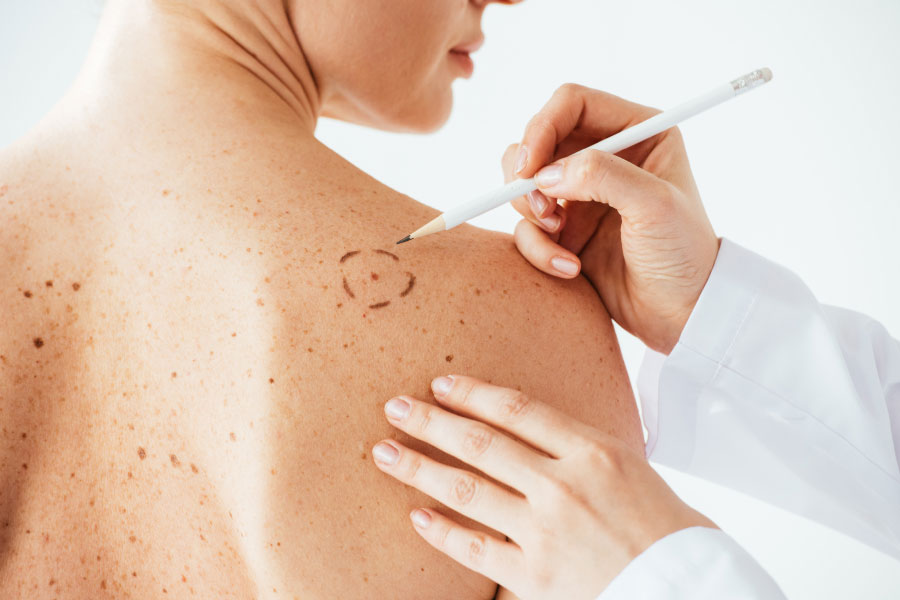
During the consultation, the dermatologist evaluates the patient’s skin and addresses her concerns. Based on this evaluation, a personalized plan is developed, which may include a skincare routine and dermocosmetics, topical or oral medication, and dermatological procedures, when indicated.
Depending on the evaluation and medical recommendation, the treatment plan may include various techniques, technologies, and procedures available at Skin Boutique. The selection depends on the condition of the skin, the identified needs, and the goals established during the consultation.
The Fractional CO2 Laser enables deep skin renewal and is recommended for treating certain cases of acne scars, uneven skin texture, wrinkles, and photoaging.
The Fotona Laser is a versatile technology that can be used in various treatment protocols for pigmentation, certain vascular lesions, acne, scars, and skin rejuvenation.
Nordlys laser technology is used to treat various pigmentary and vascular conditions.
Forever Young BBL is a BroadBand Light technology used in skin rejuvenation protocols; it can address signs of photoaging such as dark spots, redness, small blood vessels, changes in skin texture, and loss of radiance.
Chemical peels promote controlled skin renewal and can be used to treat various conditions, including pigmentation, acne, skin texture, and photoaging.
Platelet-Rich Plasma is obtained from a person’s own blood to stimulate regenerative processes. On the face, it can help improve skin quality and texture; on the scalp, it can be used in certain cases of hair loss.
Morpheus 8 combines microneedling and radiofrequency to stimulate skin remodeling and can be used in certain cases of uneven skin texture, scars, and loss of firmness.
The most appropriate treatment always depends on a medical evaluation. A technology that is effective for a particular condition may not be the most suitable for another skin type or for a different diagnosis.

If you have a skin, hair, or nail condition, or if you want to learn how to improve dark spots, acne, scars, rosacea, skin texture, or signs of aging, the first step is a medical evaluation.
During your dermatology appointment, we will develop a plan tailored to your skin, your diagnosis, and your goals.
Cédula nr. 52765
Dr. Nélia completed her Master’s Degree in Medicine at the Faculty of Medicine of the University of Lisbon and her Medical Internship in Dermatovenereology at the Centro Hospitalar e Universitário de Lisboa Central.
She complemented her specific training in Dermatology with internships in Aesthetic Dermatology and LASERs at the Dermalas Clinic of the Teknon Medical Center in Barcelona, in Hair and Nail Diseases at the Dermatology Service of the University Hospital Center in Brussels, and in Cutaneous Oncology at the IPO in Lisbon. He has attended courses in various areas including Dermoscopy, Cosmetic Dermatology, Peelings and LASERs.
Her activity encompasses General Dermatology (acne, rosacea, eczema, screening/evaluation of “signs”, pigmented and non-pigmented skin spots and lesions, among others), Hair and Nail Diseases, Dermatological Surgery and Laser Therapy, including skin rejuvenation procedures such as Fractional CO2 LASER.
He is a regular participant in national and international courses and congresses in the specialty and areas of differentiation. She collaborates in the training of doctors in the field of Dermatology. She is also a lecturer in Dermatology at the Faculty of Medical Sciences of Universidade Nova de Lisboa and a researcher in Multicenter Clinical Trials. She has authored and co-authored articles in scientific journals and book chapters in the field of Dermatology.
She is a member of the Portuguese Society of Dermatology and Venereology (SPDV) and the Portuguese Trichology and Onychology Group.

ORDER OF MEDICIANS: registration no. 63759
Dr. Catarina Correia believes in a Dermatology that goes beyond the visible skin, seeing the skin as a reflection of the balance of the organism as a whole. Her approach is based on a global and personalized assessment, always taking into account the close interaction between the skin and the rest of the body, the individual needs of each patient and the specific characteristics of each skin. His clinical practice is based on the latest scientific evidence, with the aim of providing rigorous, safe and adapted medical care, promoting natural and sustainable results.
He completed his Integrated Master’s Degree in Medicine at the Faculty of Medicine of the University of Porto and his Medical Internship in Dermatovenereology at the Centro Hospitalar e Universitário de Lisboa Norte.
He complemented his specific training in Dermatology with internships in Aesthetic Dermatology and LASER, as well as in Trichology (Hair Diseases), at the Dermatology Service of the Ramón y Cajal Hospital in Madrid, and in Plastic, Reconstructive and Aesthetic Surgery at the Pedro Hispano Hospital.
Her clinical activity encompasses General Dermatology – including acne, rosacea, eczema, screening and assessment of pigmented and non-pigmented skin signs, spots and lesions – Hair and Nail Diseases, Dermatological Surgery and Laser Therapy. It is also dedicated to skin rejuvenation procedures, including LASER CO₂, LASER Fotona, microneedling radiofrequency and Ultraformer, among others.
He regularly participates in national and international courses and congresses in the specialty and areas of differentiation, including Trichology, LASER, Surgical and Aesthetic Dermatology, Dermatoscopy, General and Pediatric Dermatology.
She is the author and co-author of 35 articles published in international scientific journals and has given more than 100 presentations at congresses, conferences and scientific meetings.
He is a member of the Portuguese Society of Dermatology and Venereology (SPDV) and the European Society of Dermatology.

You should schedule a dermatology appointment whenever you notice a change in your skin, hair, or nails that you’d like to have evaluated, such as acne, rosacea, spots, itching, hair loss, or a skin lesion.
A consultation may also be recommended for monitoring symptoms and prevention, or when you wish to improve the quality and appearance of your skin through cosmetic dermatology.
The main difference lies in the focus of each approach. Clinical Dermatology is dedicated to the prevention, diagnosis, and treatment of diseases of the skin, hair, and nails, while Cosmetic Dermatology focuses on conditions such as dark spots, scars, redness, skin texture, pores, or signs of aging.
The two aspects are often related and can be addressed in the same dermatological evaluation.
The frequency of skin checks depends on each person’s risk factors. People with many skin lesions, a personal or family history of skin cancer, or high sun exposure may need more regular monitoring.
Regardless of the frequency you’ve set, you should seek medical evaluation whenever you notice a new symptom or changes in the size, shape, color, or behavior of an existing lesion.
Daily sun protection is one of the main ways to prevent photoaging and reduce the risk of certain skin diseases. It should include adequate sunscreen, avoiding prolonged exposure during peak sun hours, and taking physical protective measures, such as wearing protective clothing, a hat, and sunglasses.
A dermatologist can recommend the skincare routine best suited to your skin’s characteristics and needs.
There is no single treatment that works for all types of skin spots, since the approach depends on the type of spot and its cause. Melasma, sunspots, and other pigmentation changes are not necessarily treated the same way.
Following a dermatological evaluation, the treatment plan may include at-home care, depigmentation products, chemical peels, laser treatments, or other technologies—either alone or in combination.
Treatment begins by controlling active acne and preventing new scars from forming. To this end, specific skin care routines and, when necessary, medication may be recommended.
Once acne is under control, scars can be treated using various procedures, such as laser therapy, chemical peels, microneedling, or microneedle radiofrequency, depending on the type and depth of the scars.
Preventing skin aging starts with a proper skincare routine and sun protection. When changes such as dark spots, fine lines, loss of firmness, or uneven texture are already present, various aesthetic dermatology treatments can be considered.
The approach is personalized and may combine at-home care, LASER, chemical peels, and other rejuvenation technologies, depending on the skin’s needs.
Yes. Hair loss can be treated, but it is important to first identify its cause, since it may be related to various factors and require different approaches.
A dermatology consultation allows for an evaluation of the hair and scalp and, when appropriate, the development of a plan that may include medical treatment, specific care, or complementary procedures.
Yes, many skin lesions can be treated or removed, but they must first be evaluated by a dermatologist. This evaluation helps determine the nature of the lesion and the most appropriate course of action.
Depending on the type of lesion, different medical or surgical procedures may be used. Not all lesions should be removed solely for cosmetic reasons without a prior evaluation.
In some cases, yes. Whether treatment can be performed on the same day depends on the reason for the appointment, the medical evaluation, and the recommended treatment plan.
Some procedures can be performed right away, while others require preparation or a follow-up appointment.
A dermatological evaluation is the first step in determining the approach best suited to your skin’s characteristics and needs.
UNTIL JUNE 12TH!
GET SUMMER READY
