

I intend to treat
Overweight
Being overweight means that there is more fat in a person’s body than is considered ideal for preventing cardiovascular disease and having a good quality of life.
But how do we know whether or not a person is at their ideal weight? The quickest and simplest way to find out if a person is overweight is through the BMI (Body Mass Index). The Body Mass Index is a calculation that allows us to assess whether a person needs to gain or lose weight or whether they are at their ideal weight. BMI is calculated using the following formula: Weight / (Height x Height). According to the World Health Organization a BMI of less than 18.5 represents thinness which also corresponds to a health problem and a BMI above 24.9 is overweight.
The main causes of excess weight?
Being overweight is often associated with poor eating habits and a sedentary lifestyle. People who eat a diet high in fat and sugar and do not get enough physical activity to burn off the excess calories consumed, the surplus is stored in the body in the form of body fat.. People are often convinced that excess weight is related to endocrine problems, but in fact only a small percentage of people suffer from endocrine pathology.
On the other hand overweight and obesity are often due to problems related to anxiety and compulsion associated with the demands of today’s societyleading the patient to seek “refuge” in food.

Degrees of excess weight and health consequences
Among the main consequences of excess weight and obesity are the the appearance of chronic diseases that can put the patient’s health and life at risk, and emotional problems related to discomfort with one’s own body. The most common diseases associated with excess weight and obesity are:
BMI | Classification | Health consequences |
|---|---|---|
18,5 a 24,9 | Normal weight | Lower risk of heart and vascular disease |
25 a 29,9 | Overweight | Fatigue, heart and vascular diseases |
30 a 34,9 | Grade I obesity | Diabetes, heart and vascular diseases |
35 a 40 | Grade II obesity | Sleep apnea, respiratory problems, heart and vascular diseases |
Greater than 40 | Grade III obesity | Reflux, mobility problems, bedsores, diabetes, respiratory problems, heart and vascular diseases |
Treating excess weight at Skin Boutique
At Skin Boutique Lisbon, Porto and Cascais, we take a multidisciplinary approach to treating excess weight. In the weight loss consultation, the doctor will assess the patient’s lifestyle, eating habits, whether or not she has binge eating, the kilos she has gained and how quickly she gained them, whether any traumatic situations have occurred – emotional stress, menopause, starting psychiatric medication, etc. In this way, it’s possible to make a diagnosis and find out why the patient has gained weight, and thus determine the appropriate therapy, which differs greatly from patient to patient. In addition to the weight loss consultation, there is nutritional monitoring and body treatments for areas of the body that are bothering the patient. The aim is to provide the patient with an experience of weight loss associated with a change in lifestyle and a gain in self-esteem.
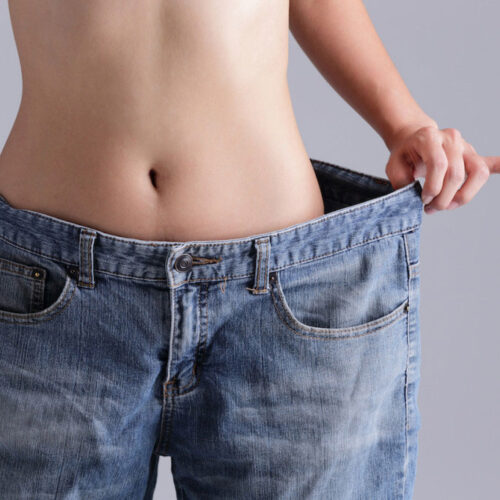
WEIGHT LOSS SUCCESS STORIES
According to Dr. Carolina Lalanda, a specialist in Endocrinology at LMR Plastic Surgery, “In our consultations we have many patients and the truth is that the patients are very different from each other. We have women who come to the consultation because they put on 5, 6 or 7 kilos after the menopause and find it very difficult to lose, as well as patients who have been through traumatic situations in their lives and have put on 30, 40 or 50 kilos. We have many success stories that are very gratifying. Obviously, the percentage of weight lost depends on the individual, so it’s easy for a patient who has more weight to lose at the start of treatment to lose more weight, but what we want in the long term is to change people’s lifestyles and their relationship with food so that they can maintain their weight, because most of the patients who come to us have already made several unsuccessful attempts to maintain their weight.”

AFTER LOSING WEIGHT, CAN I PUT IT BACK ON?
The aim of the treatment is long-term weight maintenance. Losing weight involves a strategy of nutrition coaching and medication that helps a lot in the treatment of binge eating, as well as in the balance of body and mind. By doing this long-term treatment, patients end up having a very different relationship with food and after 6, 7, 8 months of therapy, we start to reduce the weight and the patients already have new eating habits, new routines and feel very comfortable. There are many success stories.


DOES WEIGHT LOSS TREATMENT INVOLVE LIFELONG CONSULTATIONS?
There is no rule because people are all different. A patient who has a severe binge eating disorder will have to be followed up for much longer than a patient who only has a few extra kilos due to occasional overeating. The goal of any overweight treatment should be for patients to be able to be independent, go a day without medication, completely change their relationship with food and not need to come back for a consultation.
Frequently Asked Questions
Excess weight
BMI (Body Mass Index) is a calculation used to identify whether or not a person is overweight. When the BMI is above 24.9 it means that the person is overweight.
BMI is calculated using the following formula: Weight (Kg) / (Height x Height) . For example, a person who weighs 60 kilos and measures 1.65 mt : 60 / (1.65 x 1.65) = 22.06
Being overweight or suffering from obesity are terms associated with having more body fat than is considered normal and healthy. Normal weight is defined as a BMI between 18.5 and 24.9. Above this value, we are already talking about being overweight. When the BMI exceeds 30 it is considered Obesity and when it exceeds 40 it is considered Morbid Obesity.
Overweight and obesity are associated with the onset of chronic diseases such as type II diabetes, heart and respiratory diseases, arthritis and intestinal problems. They are also associated with emotional problems such as isolation, relationship problems, insecurity and low self-esteem.
Ideally, the best way to lose weight would be to eat a balanced diet with regular physical activity. However, for various reasons, this isn’t always possible and many people need professional help to get where they want and need to be. The important thing is that you need professional help and take the first step. There are various therapeutic approaches to overweight and obesity and the weight loss consultation will assess the best option for the patient, according to their specific needs.
The weight loss treatment at Skin Boutique is not a one-size-fits-all solution that promises miracles and the loss of X kilos in X days. The Weight Loss Consultation focuses entirely on a 360º medical assessment of each patient in order to prescribe an appropriate and personalized therapy. In this assessment, there are factors to take into account such as: lifestyle, eating pattern, emotional state, reason for weight gain, reproductive stage, medication you take, among other factors. These are key factors in being able to prescribe a treatment.
Weight loss through therapy is a treatment that is usually carried out over a period of no less than 6, 7 or 8 months and medication is never stopped abruptly. On the other hand, therapy is always accompanied by nutritional coaching and during this time, patients acquire new eating habits and routines. When the process of reducing medication begins, it ends up being a gradual and natural process in which patients have already gained new habits almost without realizing it.
The Weight Loss Consultation is the starting point for losing weight. A balanced diet and physical exercise should always be part of the daily routine of anyone who wants to maintain a stable weight and feel good about their body and mind. At Skin Boutique there are minimally invasive treatments to improve the appearance of the body, particularly cellulite, flaccidity and localized fat. These treatments can be a complement to weight loss treatment.
Each patient has different goals and each body reacts in different ways. While a patient who has a lot of weight to lose will lose it more quickly at first, a patient who has fewer kilos to lose will lose it more slowly. The important thing is to make progress and maintain the results over the long term.
If the patient strictly complies with the therapy and diet plan, there is no reason not to lose weight. At each appointment, the patient’s data is recorded, such as weight and measurements, in order to ensure that there is positive progress. If it turns out that there is no positive progress, it is necessary to talk to the patient to find out why. Some patients get results less quickly than others, but they always do.
