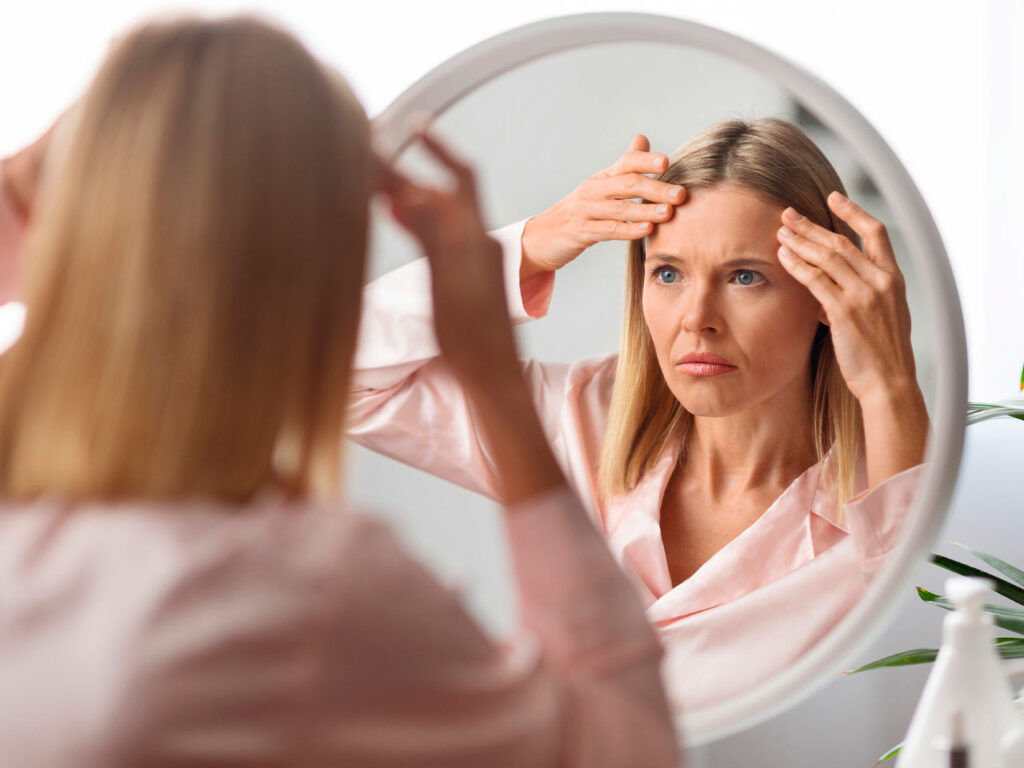
Over time, it’s normal for the body to undergo certain transformations. Skin ageing is one of them. The skin is the largest organ and the one most exposed to external aggressions, which is why it reflects these changes most quickly. This natural process reveals itself through signs such as expression lines, sagging, spots and wrinkles.
Eating habits and lifestyle are factors that can accelerate this process. But with the right care and routine for each
Skin ageing in three stages
Stage 1: Expression lines and loss of radiance
In the first phase, collagen production begins to decline, which contributes to a loss of firmness and support for the face. Along with a slight sagging, the first expression lines appear. Generally, there is also a noticeable loss of
These discreet signs appear on average between the ages of 25 and 30. This is when the first anti-ageing treatments should begin. This should include anti-wrinkle creams to delay the decline in collagen production and moisturizers. It’s also important to reinforce healthy habits, such as drinking water and taking regular exercise.
Stage 2: Wrinkles and loss of firmness
This phase occurs between the ages of 35 and 45. This is when the results of bad habits and a lack of a healthy lifestyle become more visible. The effects of poor diet, smoking, a sedentary lifestyle or excessive sun exposure begin to show on the face.
Expression lines give way to deeper wrinkles and the loss of firmness is even more noticeable. This is because the cells, in this case the filling fibers, renew themselves at a slower rate. Collagen and elastin therefore wear out more quickly.
The daily care routine should include products that aim to make the skin denser and firmer and replenish collagen fibers. Some medical-aesthetic treatments can also be considered, such as
Stage 3: Loss of density and altered facial contour
Naturally, mature skin is more flabby, less dense and firmer. All the contours of the face are altered and become less defined, such as the lips, chin, jaw and eyes. This is because cell metabolism is further reduced, as is collagen production. The decrease in hyaluronic acid, produced by the body, is also evident on the face. These are the signs of the third stage of skin ageing and usually appear from the age of 40.
To mitigate these effects, it’s important to invest in more intense moisturizing.
What precautions should you take in your routine?
From the age of 25, when the first stage of skin aging usually begins, is the ideal time to include extra facial care. Over time, the skin loses its youthful appearance and quality, but with a good skincare routine it is possible to delay these effects. This should be adapted to each stage in order to protect it from the aggressions of everyday life. Whether you have young or mature skin, it’s always important to include:
- Cleansing with specific products for your skin type;
- Moisturizer for the face;
- Tonic;
- Treatment with anti-wrinkle facial serum or moisturizer;
- Daily sun protection.
It is possible to postpone, mitigate or treat the signs of skin ageing with age-specific care. The healthier it is, the easier it will be to keep it looking beautiful and youthful for longer.
Save these tips and subscribe to our blog for other useful information on caring for your skin.